

The IFPUG Knowledge Café series offers a rare chance to explore a critical yet often overlooked dimension of software measurement: how human judgment and interpretation shape the application of Function Point Analysis (FPA).
Since the Brazilian Government decided to use function point analysis to pay software contracts many things happened. Good and bad decisions were adopted and after many adjust the brazilian government found a good solution. This solution is a effort manual called SISP (System of Administration of Information Technology Resources effort manual). The actual version of this manual is 2.3. A new version (3.0) will soon be published.
The adoption of SISP in the software development contracts, aimed at the payment of the projects, brought about changes in the contractual relations between the Brazilian software development companies and the Brazilian government. These contractual adjustments go through pricing, productivity and service level agreements.
The use of the guidelines is optional for public companies and mixed-economy companies, but it is the reference standard for SISP members. Some of the agencies that are part of the SISP and therefore can use this guide include: Attorney General’s Office (AGU), Civil House of the Brazil Presidency of the Republic (CC-PR), Controller General of the Union (CGU), Ministry of Agriculture and Livestock (MAPA), Ministry of Science, Technology and Innovation (MCTI), Ministry of Defense (MD), Ministry of Education (MEC), among other sectoral and sectional bodies.
The use of the SISP by private entities in Brazil is basically limited to companies that provide software development consulting services to government entities. The use of the SISP protocol in software development contracts with private sector companies is not common.
In this session, we will explore how Function Point Analysis evolved in Brazil from a measurement technique into a contractual effort metric used by the Federal Government and the profound impacts this shift created.
Together, we will discuss:
- How and why the Brazilian Government adopted Function Points as a basis for software contract payments
- The emergence of the SISP Effort Manual and its role in shaping pricing models, productivity assumptions, and service level agreements
- Key changes introduced in SISP version 2.3 and what to expect from the upcoming 3.0 release
- How Function Points are translated into effort in practice, using real-world project counting examples under SISP 2.3
- The differences between public-sector and private-sector adoption of SISP guidelines, and why its use remains concentrated in government-related contracts
We will also examine how these guidelines transformed contractual relationships between software vendors and government institutions, and what lessons can be drawn for broader software measurement and governance practices.
If you have ever wondered how Function Points became an effort-based contractual metric in Brazil, or how measurement standards influence pricing, productivity, and accountability in large-scale public software projects, this webinar is for you.
Curious already?
Join us for this Knowledge Café, let’s discuss it together and #Enjoy!
Date and Time:
February 23, 2026 : 10:00 a.m. Central Europe Time (Time Conversion)
Webinar Language: English
Speakers:
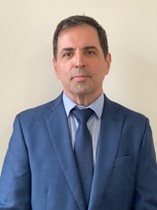
Eduardo Alves de Oliveira is PhD Master’s degree in Engineering Military Institute (IME). Degree in computer science from Federal University of Rio de Janeiro (UFRJ), postgraduate in Federal University of Rio Grande do Sul and Electronic Computing Center of UFRJ (NCE-UFRJ). Professional experience of over 26 years in information technology. CFPS since 2004. Systems Analyst and Instructor of Federal Processing Service Data from the Ministry of Finance of Brazil (SERPRO). Was selected to be a speaker at: Nesma Autumn Conference 2015 (Utrecht, Holland), The Tenth International Conference on Software Engineering Advances – ICSEA 2015 (Barcelona, Spain), Nesma IWSM MENSURA 2014 (Rotterdam, Holland), WORLDCOMP´13 – SERP’13 – The 2013 International Conference on Software Engineering Research and Practice (Las Vegas, USA), ISMA 7 (Phoenix, USA – 2012), instructor and speaker at ISMA 5 (São Paulo, Brazil – 2010), speaker and member of the roundtable 2nd CBMAS (Brazilian Conference on Measurement and Analysis) (São Paulo, Brazil – 2011) and speaker at Metrics Conference 2012 (São Paulo, Brazil). One of the authors of the book “The IFPUG Guide to IT and Software Measurement” published by IFPUG in 2012.